
Newcastle-based greeting card designer asks people in the North East to help protect the postal service
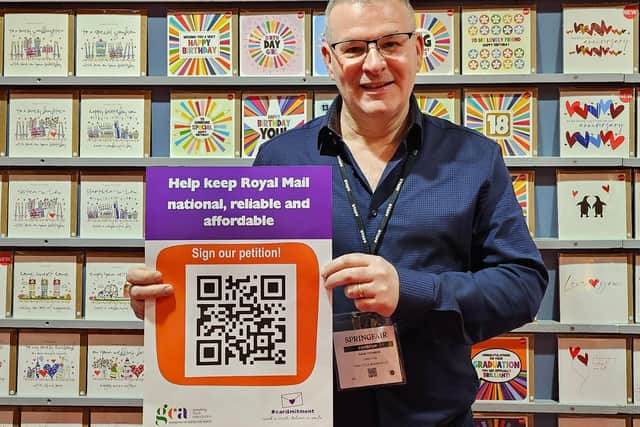
Newcastle-based greeting card designer David Thomson today joined the chorus of small business owners asking for MPs to investigate proposed changes to Royal Mail’s service obligations by signing a petition from the UK’s Greeting Card Association.
The graphic designer who set up Two Little Monkeys 25 years ago and works from a home studio in Whickham is asking people across the north east to sign the petition and protect the second class post.
David is fearful, if proposals are implemented, there will be a significant impact on the service small businesses and consumers receive.
Last month Royal Mail and regulator Ofcom proposed changes to Royal Mail’s legal obligations (the USO) that would end Saturday second class delivery and cut back delivery days to a minimum of two per week.


Even though last month Ofcom confirmed[1] it had begun a consultation on the changes that wouldn’t end until April, it gave the green light to Royal Mail’s premature trials to end Saturday second class delivery in over 30 locations this month.
These pilots reduce the service for over a million households, and Ofcom and has made clear permanent nationwide changes can be made without any involvement from MPs[2].
David Thomson said:
“The greeting card industry is a wonderful industry to be involved in. It’s an industry that spreads positivity, celebrating life’s special moments, and making personal connections.
“There’s something truly special about receiving a handwritten card, and being part of an industry that values thoughtfulness and creativity makes every design and message even more meaningful.
“Royal Mail’s plans to reduce second-class deliveries and cut services are deeply concerning to me, and especially for the greeting card industry, which relies heavily on affordable and reliable postal services.
“It’s time for MPs to step up and get involved in a big way and do something. This move will have an obvious and detrimental impact, especially to a small business like my own, making it more expensive and slower for people to send cards.
“Greeting cards are a cherished tradition, bringing joy, smiles, comfort, and celebration to millions, and this decision could significantly impact both independent designers and high-street card and gift shops that depend on consistent and reliable postal services.
“With first-class stamp prices already at an all-time high and beyond reach for some as far as finances are concerned, further reducing second-class deliveries will only push more people away from sending cards altogether, hurting not just small businesses but also the entire industry.
“I strongly disagree with the proposed plans and believe we should be protecting and supporting the postal service, not dismantling it!”
In October last year, Royal Mail raised the price of a first class stamp from £1.35 to £1.65 – an inflation-busting 22 per cent increase that was the fifth hike in less than three years.
A first class stamp is now almost twice the price of a second class stamp, which only remains affordable at 85p because it has the protection of being pegged to inflation by regulator Ofcom.
And the UK’s Greeting Card Association, which represents over 500 publishers, retailers, agents, specialist suppliers and distributors in an industry worth over £1.5bn to the UK economy, said it feared the rise could result in killing off affordable letters post for good, adding further strain on pressured high streets.
Sending a physical card is a simple, joyful and inexpensive way to create a tangible connection between people that builds and nurtures relationships. An average card costs £1.89 and it’s still only 85p, thanks to the second class stamp, to send it anywhere in the country.
However Royal Mail continues to fall short of the delivery service standards set for it by Ofcom. In December it fined Royal Mail £10.5m[3] after failing to meet delivery standards during the 2023/4 financial year[4]. confirming that consumers were increasingly switching away from First to Second post, with cost being the main driver.