
Ryton's unrecognised hero
The village of Ryton has always managed to keep itself slightly apart from the conurbation of Gateshead and Newcastle, and Holy Cross Church remains a peaceful retreat from the bustle of the city. In pride of place outside the church are the graves of the Hutchinson family, yeoman farmers and parish clerks for generations. The last of the family to be buried there is James Hutchinson, whose tombstone marks his date of death as 1832, but below his epitaph there is a memorial to his son John, inventor of the spirometer and physician to the Brompton Hospital who ‘expired at Ovalau, Fijee’.
How and why did the son of a Ryton farmer become an internationally renowned medical figure, and then, reaching the peak of his career, suddenly abandon wife and family and sail to the South Seas? These are the questions that Dr. Rob Primhak explores in his recently published book, Vital Capacity.
Hutchinson trained as a surgeon in Durham, and then completed his training in London. Working for a Life Assurance company in a period where tuberculosis was rife, he wanted a way to assess the health of his subjects’ lungs, and proceeded to design a machine that could measure the amount of air they could breathe out- a spirometer. He was the first person systematically to measure lung capacity and his meticulous research brought him the title of physician and a post at the renowned Brompton Hospital in London. His invention was used virtually unchanged in principle until the end of the twentieth century, but Hutchinson himself has been largely forgotten. Sculptor, musician, draughtsman, and engineer, he seemed to have the world at his feet, until at the age of forty-one he abandoned his medical research and signed on as a ship’s surgeon to the boom town of Melbourne, Australia.
In medical practice among the goldfields of Australia the polite London physician had become transformed into an argumentative troublemaker, even getting into a street brawl over a slanderous letter he wrote to the newspaper. After eight years in Australia he travelled to Fiji to look for land, and died there a few months later.
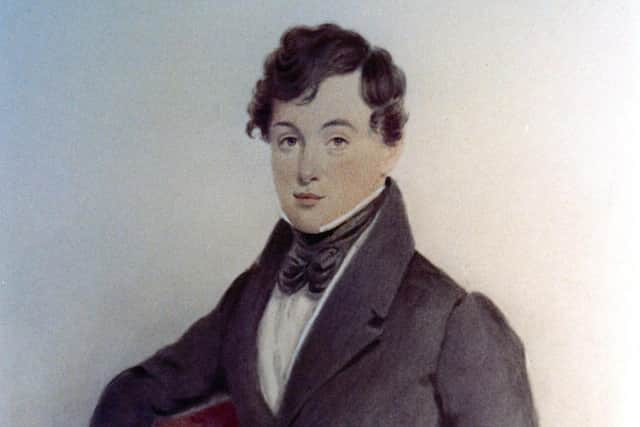

Dr Primhak is a retired children’s chest specialist who has researched into Hutchinson’s life and times and the possible causes of his sudden change of direction. In doing so he touches on a variety of social and medical topics: the first large-scale miner’s strike in Britain, the safety of mineworkers in the 19th century, social class and mobility, medical training, the dispensary movement, and the crucial debate about the cause of disease, whether miasma or germs. The book also discusses Hutchinson’s research findings in some detail, but at a level comprehensible to the lay reader.
Why did he leave? The author presents the known facts and leaves it to the reader to decide. But the biography advances a worrying possibility. Before the causes of infection were understood, did Hutchinson’s research transmit tuberculosis from subject to subject? As the evidence for transmission of infection mounted, might Hutchinson have begun to suspect as much? It is striking that he did not appear to take a spirometer to Australia, and wrote nothing further about lung volumes.
This book is the story of a talented and ingenious man, whose life took a strange and unexpected course, and it takes us through the birth struggles of modern medical science at the end of the Age of Enlightenment. His legacy, the spirometer, has remained an invaluable method of assessing lung health until the present day.
Vital Capacity is available to order from all good bookshops, or online from Troubador Publishing: https://troubador.co.uk/bookshop/biography/vital-capacity