
Tyne and Wear Nexus Metro boss gives verdict on new trains after rocky first year hit by teething troubles

The woman in charge of the Tyne and Wear Metro says the system’s new train fleet has been a “real positive”, despite frustration with teething problems.
It is almost a year since the first of the Metro’s new Stadler carriages entered service, after a lengthy wait and multiple delays which hit the £362 million project.
The arrival of the Swiss-built trains has long been hailed as the start of a brighter future for the Metro, as they replace the struggling fleet that has been running since the system’s launch in 1980 and has become increasingly unreliable.
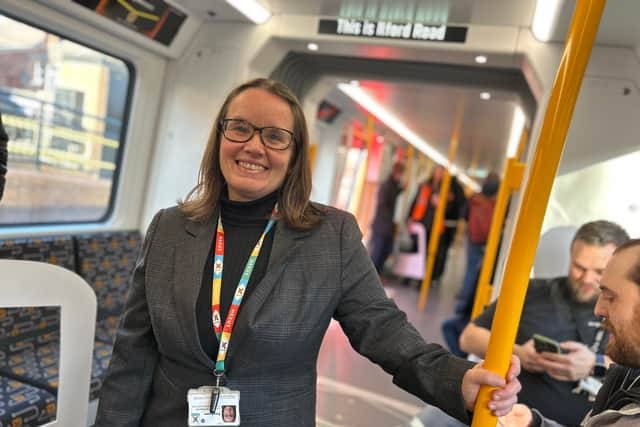

Their first 11 months in action have not been without problems – most notably an incident in which a train door opened on the wrong side, causing the new fleet to be pulled from service in April, and an unresolved fault with their air conditioning system that has caused leaks during hot weather.
But Nexus managing director Cathy Massarella told councillors last week that the Metro is “showing continued improvement” overall thanks to the gradual introduction of the new trains.
Stadler has now delivered 34 of a total 46 new Metrocars to the UK, 16 of which are in regular usage, with the full rollout due to complete by the end of 2026.
Ms Massarella told members of Newcastle City Council last week that the reliability of the Metro service, measured by the number of kilometres trains actually run compared to what they are scheduled to for a full timetable, has jumped from 91% to 95% in the past year.
She added that punctuality of services, the number of trains that arrive at stations within a window of 30 seconds earlier than scheduled or three minutes late, has also improved from 76% to above 80% on average so far this year.
That said, the most recent set of punctuality data actually showed a slight dip in performance of 81% between September 14 and October 11 compared to 82% in the same period 12 months prior.
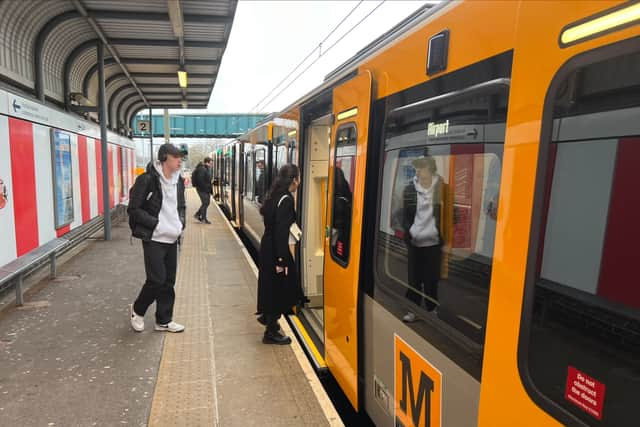
Speaking at a full council meeting at the Civic Centre last Wednesday, Ms Massarella said there “undoubtedly have been teething problems” but that passengers could expect to see improvement.
She added: “I talked last December about how this commissioning and training phase would be the most challenging and that, given the bespoke design of the trains and our infrastructure, there would be a period of learning and adjustment. That has proved to be the case, but the trend since the introduction of the new fleet is positive in terms of reliability and less faults are being experienced per kilometre operated. The new trains are experiencing less faults than the old ones already, which is a real positive.”
The Nexus chief added that recent driver shortages that had led to reduced weekend services over recent weeks had been down to a spike in sickness absences, but that the system should be in a “much better place” as that eases and their next phase of driver training is completed.
Metro bosses are also gearing up for the impact of winter weather, which has wreaked havoc with services in the past as the old trains have struggled to cope with freezing temperatures.
Ms Massarella said that the new fleet had been “tested extensively in Switzerland in the winter”, adding: “We are really alive to the fact that it is the last winter we will be nursing the old trains through and that is requiring a lot of work at the minute, a lot of pre-emptive work. So we hope we are ready for that.”