
Crunch meeting to rule on 1,450 more new homes on outskirts of Newcastle that would take 10 years to build

Plans to build more than 1,400 new homes on the outskirts of Newcastle will come before decision-makers this week.
A £216 million next phase of development around Callerton, on fields in the outer west of the city, could be signed off by Newcastle City Council on Friday.
Latest plans from housebuilders Taylor Wimpey and Persimmon include an initial 382 homes and a spine road to what would be the ‘Upper Callerton’ section of a construction masterplan for the area.
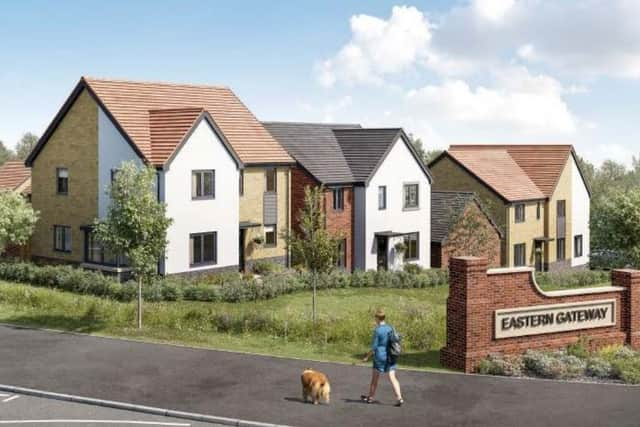

That would be followed by up to 1,068 more houses, as well as a primary school and a town centre incorporating shops and community facilities.
The development site, between the A696 and Hareydene, sits partly within the green belt and is close to the Woolsington Ponds nature area. A large section of the land was formerly an open cast coal mine in the 1990s.
Originally, the land had been earmarked for only 1,200 homes in the city’s housing masterplan – rather than the total 1,450 proposed now.
However, Civic Centre planners are recommending the latest designs for approval ahead of a meeting of the council’s planning committee on Friday.
A report to councillors says that the increased density of the housing “would be compatible with delivering a well-designed development”.
The first stage of the building work would deliver a mix of flats and houses, 84% of which are designated as family homes.
The mix of the remaining 1,068 houses has not yet been decided, with the developers only seeking outline planning permission for those at this stage.
It is claimed that around 330 jobs would be supported through a 10-year construction period for the estate, with hopes of up to 50 new jobs being created in new shops and other infrastructure once the development is complete.
17 public objections have been lodged against the scheme – including concerns over traffic noise and pollution, the “unjustified” loss of green belt land, negative impacts on wildlife at the Woolsington Ponds, and local schools and healthcare services being unable to cope with rising demand.
One opponent wrote: “None of the proposed infrastructure for these housing estates has been implemented (shop, school, GP surgery), which creates doubt as to whether any infrastructures will be added to the proposed new estate – thereby putting more pressure on the existing services. It fills me with dismay that none of the original character of this once rural area will remain.”
Objections were also made by the British Horse Society, claiming a lack of consultation to understand the impact of the development on horse riders, as well as the Newcastle Cycling Campaign and a neighbouring landowner.
Recommending that councillors give approval to the plans, subject to a legal agreement to secure conditions including a £9.6 million contribution to primary education in the area and £4.8 million for highway improvements, city planners concluded that the estate was a “good quality design”.
They said that the impact on the green belt “is appropriate as the spatial and visual openness would be retained” and that 15% of the proposed housing would be affordable.
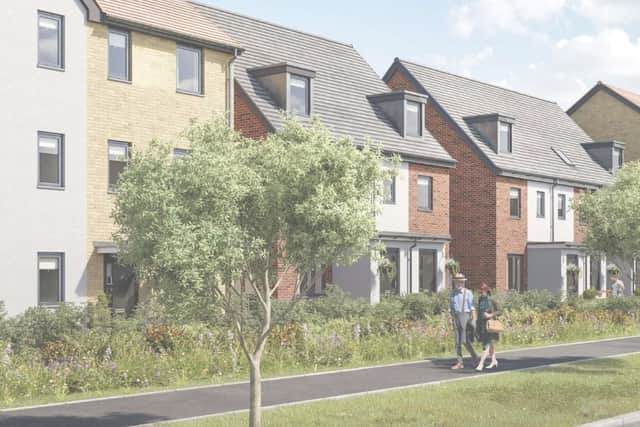
The developers’ planning application describes the Upper Callerton project as a “vibrant, high-quality urban neighbourhood seamlessly integrated into an existing fabric of Callerton”.
It adds: “Designed to offer residents and the broader community an array of facilities such as a local centre offering essential amenities, shops, and healthcare options it also provides the allotments area to prioritise well-being and encouraging healthy living. The design delivers a primary school to cater for educational needs of the residents of the new development and to serve a wider area.
“This design approach ensures a harmonious coexistence with the environment. Offering a number of recreational options, the development prioritises sustainability and ecological sensitivity, with great attention given to preserving and enhancing the existing natural landscape.”