
We've found an amazing 4,000 year-old Bronze Age site at our Northumberland excavation

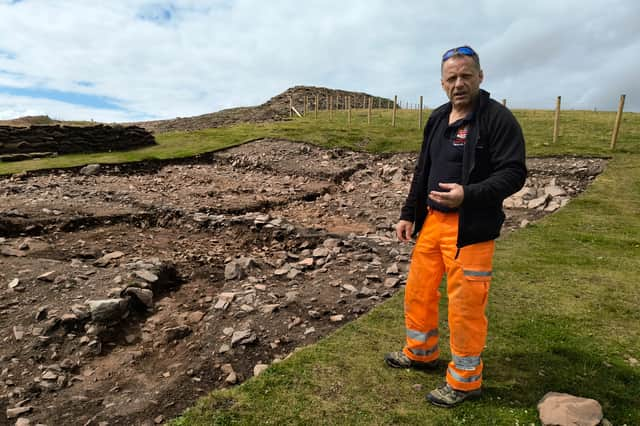
A major archaeological excavation at Harden Quarry in Northumberland National Park has revealed a new look into Bronze Age life in the North East.
Experts say the development offers the clearest insight yet into early settlement and farming in upland Northumberland.
Archaeologists uncovered a fascinating Bronze Age settlement on a hilltop. They found platforms where roundhouses once stood, along with fields and clearance cairns, or piles of stones cleared by Bronze Age farmers to create fields.

Three burial cairns were also discovered, one built on top of two small, earlier round cairns. The older cairns contained a stone grave box, or ‘cist,’ which likely held a human skeleton. This skeleton has not survived the acidic soil.
The later cairn included cremated remains, some placed in pots, including one fully intact pot and more burials in nearby pits.
One clearance cairn was dated to around 2400 BC, the very start of the Bronze Age, and much earlier than expected for upland farming in the area. Pottery fragments from a ‘Beaker’ vessel and the cist burial suggest that people were living and burying their dead there as far back as 2400 BC. It is hoped further tests will confirm this.
These findings suggest people were farming in the Cheviot Hills earlier than previously thought, reshaping understanding of prehistoric life in the region.
Clive Waddington, Managing Director, Archaeological Research Services Ltd, said: "The discovery of an earlier burial cairn beneath the Bronze Age ring cairn on the highest point of Bleakmoor Hill, is significant.
“It suggests Early Bronze Age communities expanded into and started farming these uplands earlier than we imagined, giving us a new timeline for human activity in The Cheviots."
“We still don’t know that much about how people were living in the Bronze Age, particularly in Northumberland. What’s exciting about the discoveries here is that we have almost a full 360-degree view on those early people’s lives.
“We’ve got where they are living, where they are burying their dead close to the gods, and we have the landscape in which they are farming, which is rare in archaeology.”
Chris Jones, Historic Environment Officer for Northumberland National Park Authority, welcomed the findings, adding: "This project demonstrates the value of developer funded archaeology to the National Park’s historic environment.
“These finds deepen our understanding of the early history of The Cheviots Hills, helping us to better interpret and share this knowledge with the public, including current and future generations."